
Traumatic Brain Injury (TBI) presents significant challenges, impacting cognitive, physical, and emotional functions for those affected. Whether it’s a service member returning from deployment, a veteran seeking long-term care, or a federally insured patient, the journey to recovery can be complex and demanding. The unseen wounds of TBI require specialized care that addresses the whole person, not just isolated symptoms.
Physical therapists play an indispensable role in navigating this recovery. They are key members of multidisciplinary teams, guiding individuals through tailored rehabilitation programs designed to restore function, reduce limitations, and enhance overall quality of life. This specialized approach is particularly vital within federal healthcare systems, where our mission-ready populations often face unique injury mechanisms and recovery expectations.
Our organization, the Federal Physical Therapy Section (FPTS), is dedicated to advancing clinical excellence in federal physical therapy, fostering quality in patient care, professional growth, and integrated standards for all our members. We understand the profound impact TBI can have, and through resources like our home page, we aim to support practitioners in delivering high-quality care to our nation’s servants and federally insured patients.
What is a Traumatic Brain Injury and How Does Physical Therapy Help?
A traumatic brain injury (TBI) occurs when an external force, such as a blow or jolt to the head, disrupts normal brain function. Physical therapy addresses the multifaceted impairments that follow TBI, including balance deficits, motor control issues, dizziness, and decreased endurance, by designing personalized exercise and movement strategies to restore function.
TBIs can range from mild concussions to severe injuries with long-term consequences. The Centers for Disease Control and Prevention (CDC) highlights that TBI is a major cause of death and disability globally, underscoring its public health significance. In our practice, serving service members, veterans, and federally insured patients, we’ve seen firsthand how these injuries can manifest in varied ways, demanding a comprehensive and adaptive rehabilitation approach. Physical therapists help individuals regain strength, improve coordination, and enhance their ability to perform daily tasks, which is crucial for reintegration into daily life or return-to-duty.
What Does Traumatic Brain Injury Physiotherapy Assessment Involve?
A comprehensive TBI physiotherapy assessment systematically evaluates physical, cognitive, and functional impairments following injury. This involves assessing balance, gait, motor control, strength, sensation, and the ability to perform daily activities. It helps establish a baseline, identify specific deficits, and guide the creation of an individualized rehabilitation plan.
Our collective experience across military and VA systems highlights the importance of thorough initial and ongoing assessments. When a patient presents with a TBI, physical therapists don’t just look at gross motor function. We delve into specific areas that are often compromised, working to identify the root causes of dysfunction. Board-certified providers specializing in operational readiness often emphasize a nuanced approach to assessment, recognizing that a TBI can present with a wide array of symptoms.
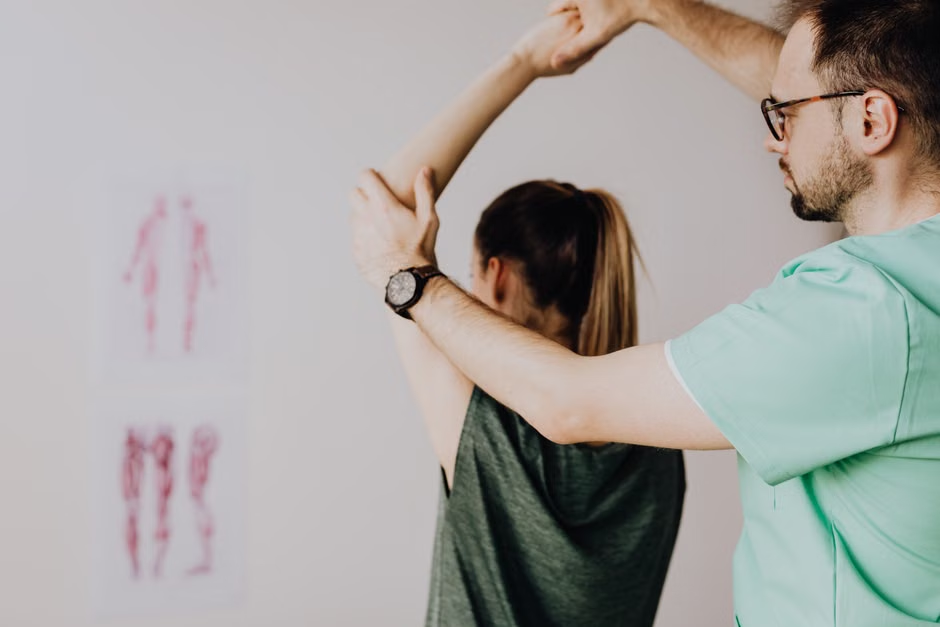
Key areas of assessment include:
- Neurological Screening: Examining cranial nerve function, reflexes, and sensation.
- Balance and Vestibular Function: Using tests like the Berg Balance Scale or assessments for BPPV (Benign Paroxysmal Positional Vertigo).
- Gait Analysis: Observing walking patterns, speed, and stability, often identifying asymmetries or compensatory strategies.
- Motor Control and Strength: Testing muscle strength, coordination, and the ability to perform precise movements.
- Posture and Mobility: Assessing spinal alignment, joint range of motion, and overall functional mobility.
- Cognitive-Motor Integration: Evaluating how cognitive demands impact physical performance during complex tasks.
- Functional Activities: Observing how individuals perform daily tasks, such as getting out of bed, dressing, or navigating obstacles.
Understanding these elements allows us to develop targeted interventions. For physical therapists interested in refining their assessment techniques and contributing to advanced practice standards, our organization provides a platform for professional development and collaboration.
What Rehabilitation Protocol is Followed for Traumatic Brain Injury?
TBI rehabilitation protocols are highly individualized, typically integrating a phased approach focusing on symptom management, functional restoration, and return to activity. It commonly involves therapeutic exercise, balance training, manual therapy, and movement re-education, progressing from basic mobility to complex, task-specific training, often with a strong emphasis on non-pharmacologic strategies.
The journey through TBI rehabilitation is rarely linear. We work with patients from the acute phase, often in federal hospitals, through subacute and chronic stages, adapting interventions as their recovery progresses. This involves a dynamic process of re-evaluation and adjustment, ensuring that the protocol remains relevant to the individual’s evolving needs and goals. Roger Carlson, a respected voice among federal physical therapists, often emphasizes that successful protocols require not just adherence to clinical guidelines but also a keen understanding of the patient’s unique environment and challenges, particularly within the federal system.
“Early, individualized, and multidisciplinary rehabilitation is critical for optimizing outcomes in traumatic brain injury recovery. Integrating physical therapy, occupational therapy, and speech-language pathology provides a holistic approach to address the broad spectrum of impairments.”
Non-Pharmacologic Management: A Core Component
Physical therapy is a cornerstone of non-pharmacologic management for many TBI symptoms, particularly pain, dizziness, and motor deficits. Such interventions have the potential to decrease reliance on opioids and other high-risk medications, which is in line with federal priorities of safer care of pain. While physical therapy addresses core movement dysfunctions, TBI recovery often requires collaboration with other disciplines.
For instance, occupational therapy might focus on adapting daily tasks, while speech-language pathology addresses communication and swallowing issues. Neuropsychologists help manage cognitive and emotional challenges. Our role as physical therapists is often to integrate these elements, ensuring that physical recovery supports the patient’s overall cognitive and emotional well-being. This multidisciplinary approach enhances quality care throughout the entire field, supporting the patient’s journey towards readiness, disability prevention, and long-term cost control.
What are Common TBI Physical Therapy Exercises?
Common TBI physical therapy exercises are designed to address specific deficits identified during assessment, focusing on balance, coordination, strength, and endurance. These often include vestibular rehabilitation exercises, targeted strengthening, gait training, and dual-task activities that challenge both physical and cognitive abilities, all progressing in difficulty as the patient improves.
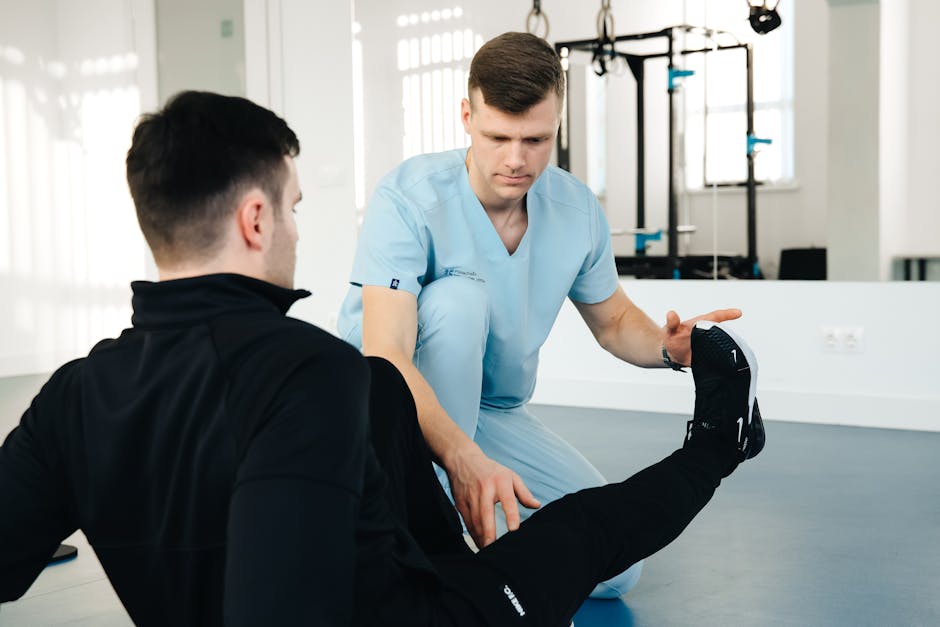
In our clinics, we utilize a range of therapeutic exercises, carefully graded to meet each individual at their current functional level. The goal isn’t just to make muscles stronger; it’s to re-establish neural pathways and improve the brain’s ability to control movement effectively. This often involves repetition, focus, and a significant amount of patient education.
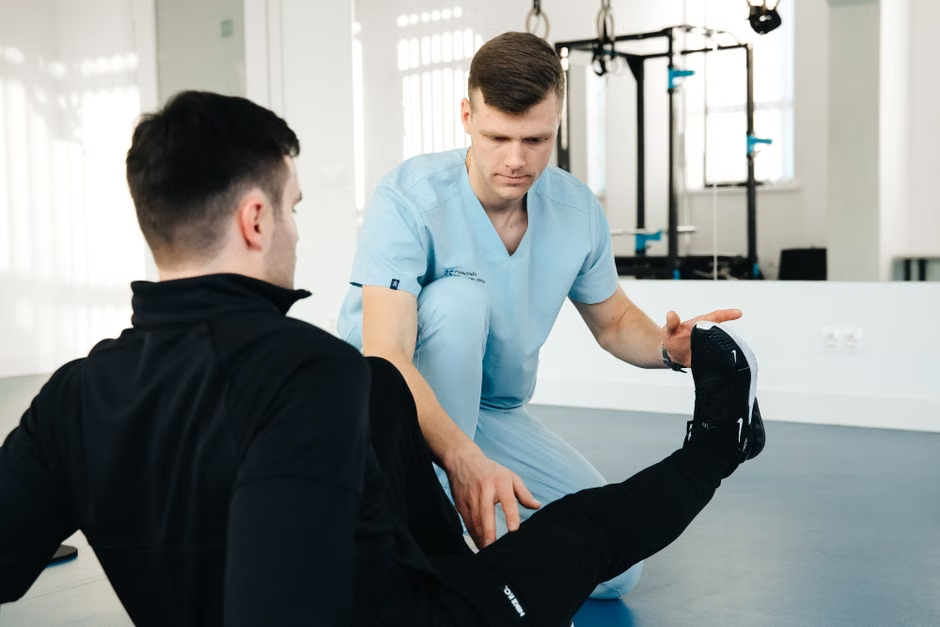
Practical tips and common exercises often include:
- Balance Training: Progressing from stable surfaces to unstable ones, like foam pads, or performing exercises with eyes closed to challenge the vestibular system.
- Vestibular Rehabilitation: Specific head and eye movements to habituate the brain to dizzying stimuli, crucial for those experiencing vertigo or imbalance.
- Gait Training: Practicing walking on varied terrains, incorporating obstacles, or performing tandem walking to improve coordination and stability.
- Strength and Endurance Training: Using light weights, resistance bands, or bodyweight exercises to rebuild muscle strength and improve cardiovascular fitness.
- Dual-Task Activities: Combining a physical task (e.g., walking) with a cognitive task (e.g., counting backward) to improve the brain’s ability to multitask, critical for complex environments.
- Movement Education: Teaching efficient and safe movement patterns for daily activities, from lifting objects to navigating stairs, reducing risk of re-injury.
These exercises are fundamental in helping patients regain independence and, for our service members, achieve optimal operational readiness.
What is the Recovery Timeline for Severe Traumatic Brain Injury?
Recovery from severe traumatic brain injury can be a prolonged process, often spanning months to years, with the most significant improvements typically observed within the first 6 to 12 months. While full recovery may not always be possible, ongoing rehabilitation can continue to yield gains in function and quality of life even years post-injury, though at a slower pace.
It’s important to manage expectations realistically. There’s no one-size-fits-all timeline, as each TBI is unique, influenced by injury severity, pre-existing conditions, age, and adherence to therapy. Our experienced physical therapists understand that progress can fluctuate; some days are better than others. The journey requires patience, persistence, and a strong support system. We celebrate small victories, recognizing that incremental improvements contribute significantly to overall recovery and mission-ready capabilities.
“Many individuals with TBI achieve substantial functional gains over time, especially with consistent and tailored rehabilitation. While the most rapid improvements occur in the initial phase, a commitment to therapy can lead to meaningful progress in the long term, adapting to persistent challenges and maximizing potential.”
— National Institute of Neurological Disorders and Stroke (NINDS)
Physical therapy contributes significantly to the federal medical services, and its assistance allows service members, veterans, and federally insured patients to remain mobile, independent, and mission-ready after a traumatic brain injury. Through expert assessment, individualized rehabilitation protocols, and dedicated support, we empower individuals to reclaim their abilities and improve their quality of life. The Federal Physical Therapy Section remains committed to supporting our practitioners in providing this essential, high-quality care, fostering a community of practice where expertise thrives and patient outcomes are consistently prioritized.