

Pain, limited mobility, and a recovery that stalls out are among the most common reasons veterans turn to VA healthcare. Physical therapy sits at the center of rehabilitation for these conditions, yet many veterans don’t know how to access it, what happens at the first visit, or whether their specific problem qualifies. The gap between eligibility and effective care is often just a matter of knowing how the system works.
VA physical therapy is staffed by licensed clinicians working within federal healthcare standards, and the care they deliver is not generic. They assess acute injuries such as sprains and stress fractures, develop specific exercise regimens that rebuild strength, flexibility, and endurance, and work alongside multidisciplinary teams in federal hospitals and clinics. The scope includes chronic pain, post-surgical recovery, balance disorders, and neurological conditions, all managed through non-pharmacologic approaches that decrease reliance on opioids and other high-risk medications.
The Federal Physical Therapy Section has long documented how physical therapy contributes significantly to the federal medical services, shaping readiness, disability prevention, and long-term cost control across VA, military, and other federal agency settings. Understanding where your care fits within that system is the first step toward using it well. The detailed overview of the role of physical therapy in federal medical services outlines exactly how these clinical services support veterans from injury through full functional recovery.
What Does VA Physical Therapy Actually Cover?
VA physical therapy encompasses evaluation, diagnosis of movement dysfunction, and hands-on treatment using therapeutic exercise, manual therapy, posture retraining, and movement education. Physical therapists in VA settings are licensed clinicians, frequently with advanced training in areas specific to veteran populations, including combat-related musculoskeletal injuries, amputee rehabilitation, and traumatic brain injury recovery.
Eligibility begins with VA healthcare enrollment. Veterans who served on active duty and separated under conditions other than dishonorable are generally eligible. Once enrolled, a VA primary care provider typically generates a referral to physical therapy, though direct access policies vary by facility. A landmark review published in JAMA Internal Medicine and indexed on PubMed found that physical therapy for low back pain reduced downstream opioid use by 89 percent compared to patients who did not receive PT as a first-line intervention, reinforcing why VA clinical pathways increasingly prioritize it early in the care process.
What Happens at a VA Physical Therapy Appointment?
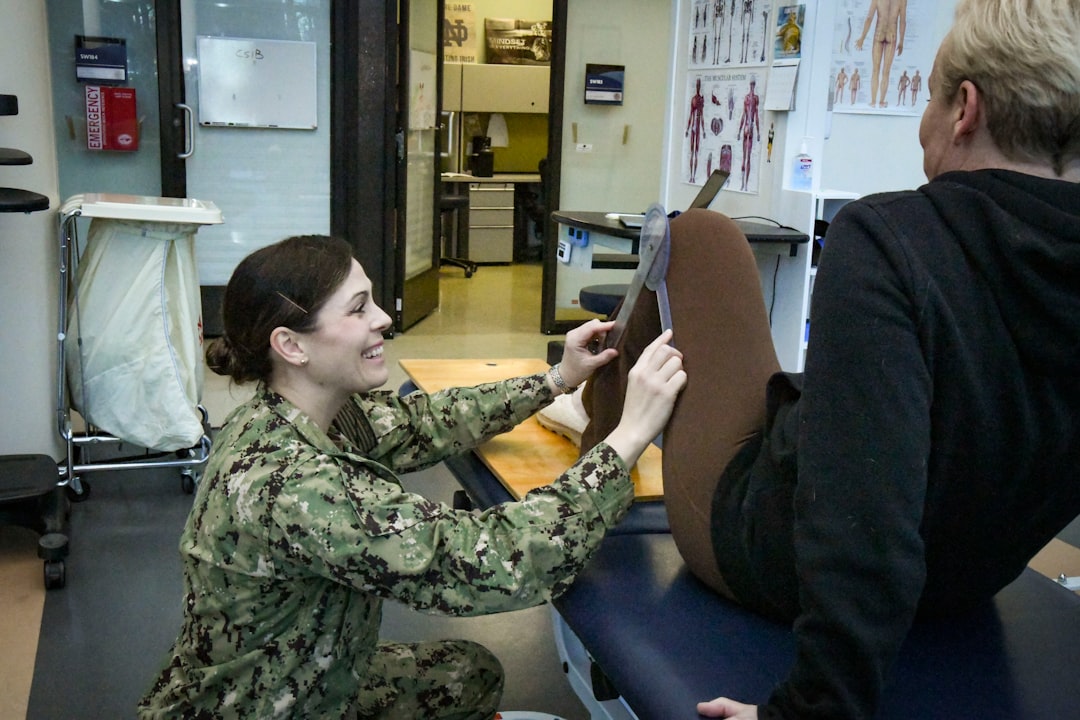
The first appointment is an evaluation, not a treatment session. Your physical therapist will take a detailed history of your injury or condition, assess range of motion, strength, and functional movement patterns, and establish a baseline for your care. Expect it to run 45 to 60 minutes. Follow-up sessions are typically 30 to 45 minutes and focus on progressive treatment toward the goals set during the evaluation.
Appointments are scheduled through your VA care team. After a referral is placed, you can contact the PT department at your facility directly, or use the VA’s online scheduling tools through MyHealtheVet. Wait times vary significantly by location, so asking about the facility’s current availability at the time of referral is practical. The VA Representative resources maintained by the Federal Section can point you toward contacts and advocacy support if access is delayed or unclear. Roger Carlson, who has contributed to Federal Section resources on federal PT access, notes that veterans who come to their first appointment with a written summary of their symptoms and functional limitations typically move through initial evaluation more efficiently.
What Not to Say at a VA Appointment?
Avoid minimizing your symptoms. Veterans frequently downplay pain or functional loss out of habit, reluctance to “complain,” or concern that they won’t be taken seriously. This works against you. Your therapist can only build an accurate treatment plan from what you accurately report.
Specific things that slow your care down: saying “it’s not that bad” when rating pain, omitting activities you’ve stopped doing because of the problem, or failing to mention prior treatments that didn’t work. Your PT needs the full picture. Describe pain at its worst, not its average. Name the functional tasks you can’t complete, whether that’s lifting, climbing stairs, sleeping, or returning to work. Honesty about limitations is what drives a treatment plan that actually fits your life. If you’re unsure what’s relevant, say everything and let the clinician sort it out.
What Conditions Does VA Physical Therapy Treat?
VA physical therapists evaluate and treat a broad spectrum of conditions affecting the musculoskeletal and neuromuscular systems. The following represent the most common presentations in the veteran population:
- Low back pain, including chronic pain from service-related strain or disc pathology
- Shoulder injuries, including rotator cuff tears and post-surgical repair recovery
- Knee conditions, including ligament injuries and osteoarthritis management
- Ankle sprains, stress fractures, and lower extremity overuse injuries
- Balance and vestibular disorders, including vertigo
- Traumatic brain injury rehabilitation with movement and coordination components
- Amputee care and prosthetic gait training
- Chronic pain syndromes using non-pharmacologic management protocols
This list is not exhaustive. If you’re uncertain whether your condition qualifies, bring it to your primary care provider and ask for a PT consultation. Physical therapists are trained to assess and, where appropriate, refer out to other specialists.
“Physical therapy should be considered a first-line treatment option for musculoskeletal pain conditions. Evidence consistently supports its effectiveness for reducing pain and improving function while decreasing the need for opioid medications.”
— JAMA Internal Medicine via PubMed, National Library of Medicine
Can a Physical Therapist Help with Vertigo?
Yes. Vestibular physical therapy is an established specialty that treats benign paroxysmal positional vertigo (BPPV), the most common cause of dizziness in adults. A trained physical therapist performs repositioning maneuvers, such as the Epley maneuver, to move displaced calcium crystals within the inner ear back to their correct position. Most patients see significant improvement within one to three sessions.
In our clinical experience treating veterans with vestibular disorders, dizziness is frequently underreported because patients assume nothing can be done. That assumption delays care that is often quickly and durably effective. The Mayo Clinic confirms that canalith repositioning procedures performed by trained providers resolve BPPV in the majority of cases, often in a single visit. VA physical therapy departments at larger medical centers frequently have therapists with specific vestibular training. If vertigo is affecting your balance, daily function, or driving safety, request a vestibular PT evaluation through your VA care team.

What Is the VA 72 Hour Rule?
The VA 72 hour rule refers to the standard under the Veterans Access, Choice, and Accountability Act and subsequent Mission Act provisions that governs community care eligibility. If a veteran cannot get a VA appointment within 20 days for a primary care or mental health appointment (or within a drive-time standard for specialty care), they may qualify for community care, meaning VA-authorized care at a non-VA facility. For physical therapy specifically, if your local VA PT department cannot schedule you within the applicable access standard, you may be eligible to receive PT through a community provider at VA expense. Ask your care team about community care eligibility if wait times at your facility are significant.
When Physical Therapy Is Not the First Step
Physical therapy works best when a clear diagnosis is already in place. If there’s unresolved swelling, suspected fracture, acute nerve compression with weakness, or a condition that may require surgical evaluation, your primary care provider may need to order imaging or specialist consultation before PT begins. Starting rehabilitation before ruling out structural pathology can, in some cases, delay appropriate treatment.
Similarly, some veterans benefit from complementary or alternative approaches alongside PT. Acupuncture, cognitive behavioral therapy for chronic pain, and occupational therapy for functional task retraining are all available through VA and work in conjunction with physical therapy for complex presentations. The Federal Physical Therapy Section supports an integrated model of care precisely because no single modality addresses every dimension of a veteran’s recovery. Board-certified physical therapists working in VA settings are trained to recognize when a referral out or a parallel referral serves the veteran better than PT alone.
What to Expect: A Realistic Recovery Timeline
Physical therapy outcomes depend heavily on the condition, its severity, how long it has been present, and how consistently the veteran engages between sessions. Acute injuries, a recent ankle sprain or post-surgical shoulder, often respond within six to twelve weeks of regular PT. Chronic conditions, pain that has persisted for months or years, typically require longer timelines and more realistic goal-setting around functional improvement rather than complete pain elimination.
Grading return-to-duty plans in military populations follows a similar principle. Progress is measured against functional benchmarks, not just pain scores. A veteran aiming to return to physically demanding work needs a progression that tests and builds under load, not just rest-based recovery. In our practice working with veteran populations, the veterans who progress fastest are those who complete their home exercise programs, communicate honestly about how sessions feel, and adjust expectations to focus on function rather than waiting to feel entirely pain-free before re-engaging with activity.
“Physical therapy and related rehabilitative services improve physical function and reduce pain, often with effects that persist long after the formal treatment episode ends, making early intervention a high-value clinical priority.”
Tips for Getting the Most from VA Physical Therapy
- Come prepared to your evaluation. Write down your symptoms, when they started, what makes them worse, and what you’ve already tried. This saves time and produces a better initial plan.
- Do your home exercise program. The exercises your PT assigns between sessions are not optional add-ons. They’re where the actual adaptation happens. Skipping them extends your care timeline.
- Report changes honestly. If an exercise is causing sharp pain or new symptoms, say so at the next session. Don’t push through the wrong kind of discomfort.
- Ask about community care if wait times are long. You have options if your local VA PT department is booked out beyond reasonable timelines.
- Engage your care team as a unit. Your primary care provider, PT, and any specialist working with you should share information. Don’t assume they’re communicating if you haven’t confirmed it.
- Know your goals before discharge. Before your PT episode ends, establish a clear maintenance plan and know which symptoms should bring you back for a reassessment.
VA physical therapy, used well, is one of the strongest tools in the veteran healthcare system for restoring function, managing pain without medication, and keeping veterans mobile and independent. The Federal Physical Therapy Section’s network of federal PT professionals works to raise the standard of this care across every VA and federal clinical setting in the country. If you’re a veteran with a physical limitation that’s affecting your daily life, starting a conversation with your VA primary care team about a PT referral is the most direct path toward getting it addressed.